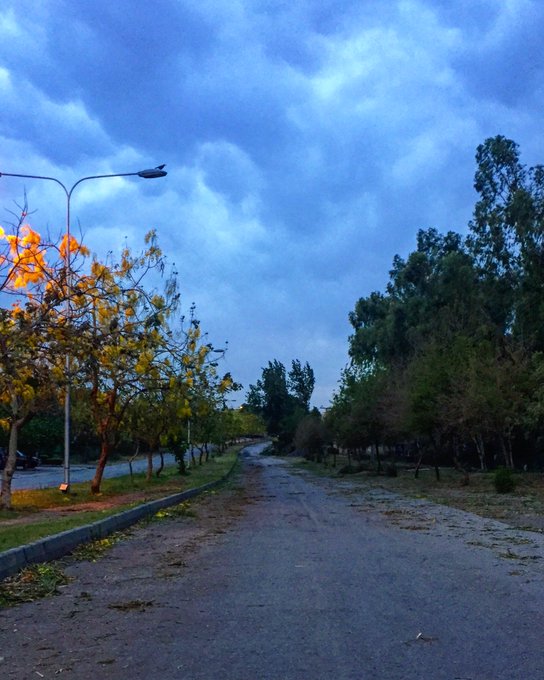
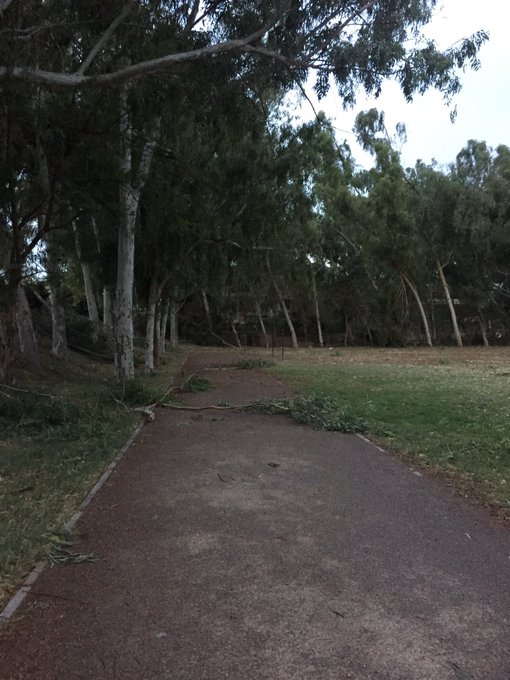
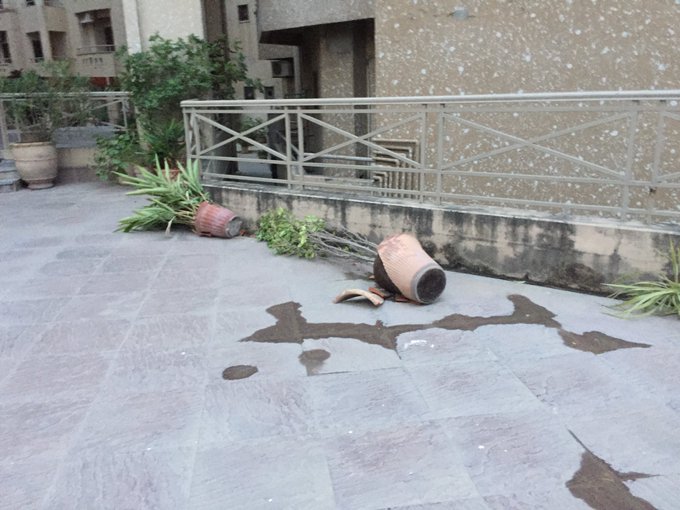
12 dead as powerful storm batters Islamabad, KP

ISLAMABAD: Residents of the federal capital and Rawalpindi endured a powerful storm late Wednesday night, with some reports of as many as seven dead and dozens more injured.
Seven died and dozens were injured as the heavy rains also affected Khyber Pakhtunkhwa and the Federally Administered Tribal Areas, including in Peshawar, Charsadda, Mardan and Khyber Agency. Nowshera only reported injuries, while Kalam and Mansehra reported damages, but no casualties. According to Pesco, efforts are underway to restore electricity from 21 tripped feeders.
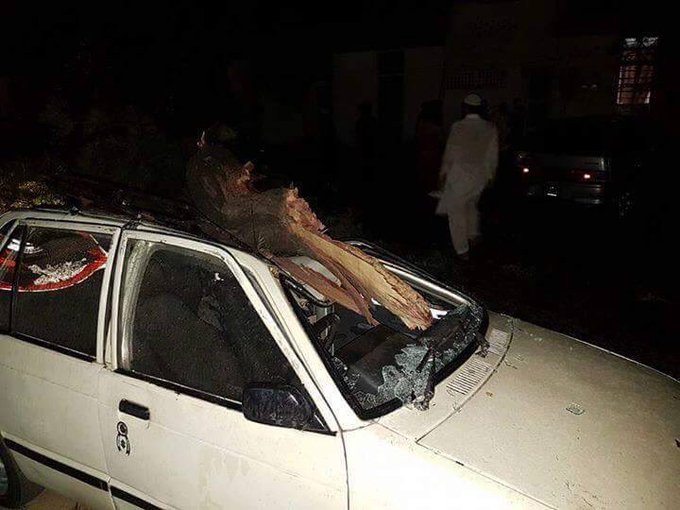
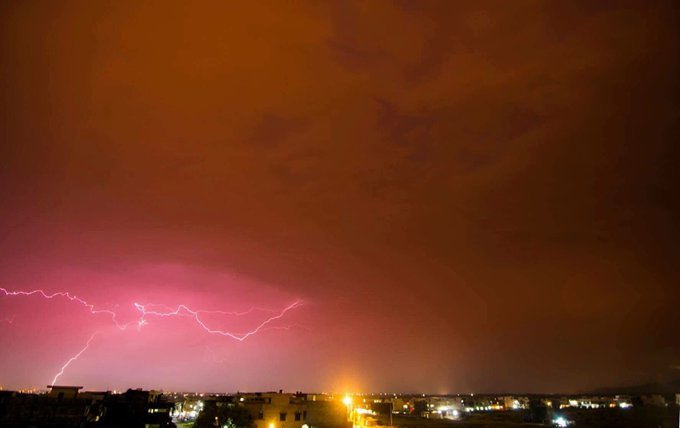
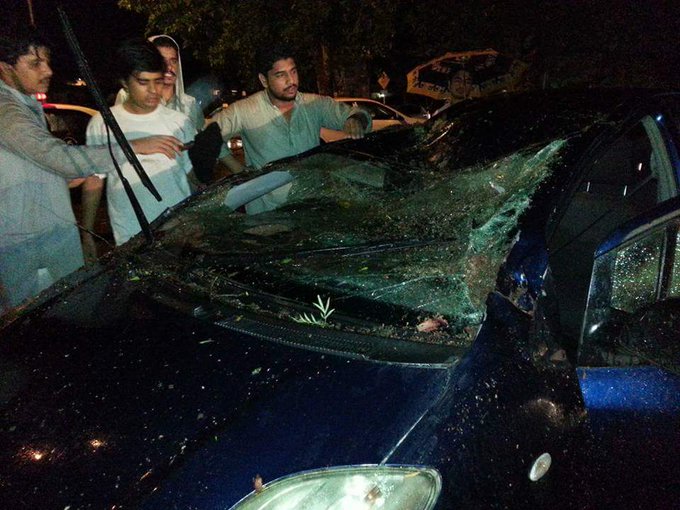
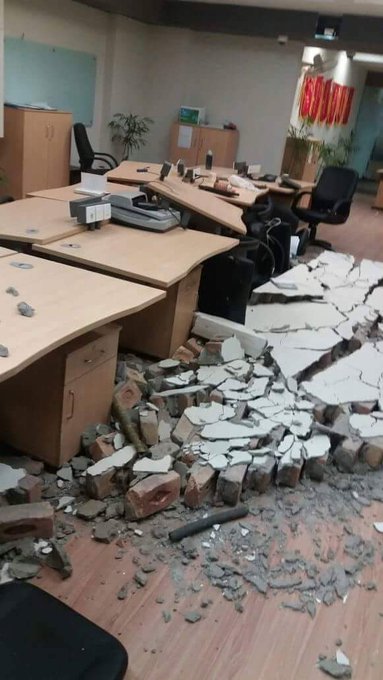
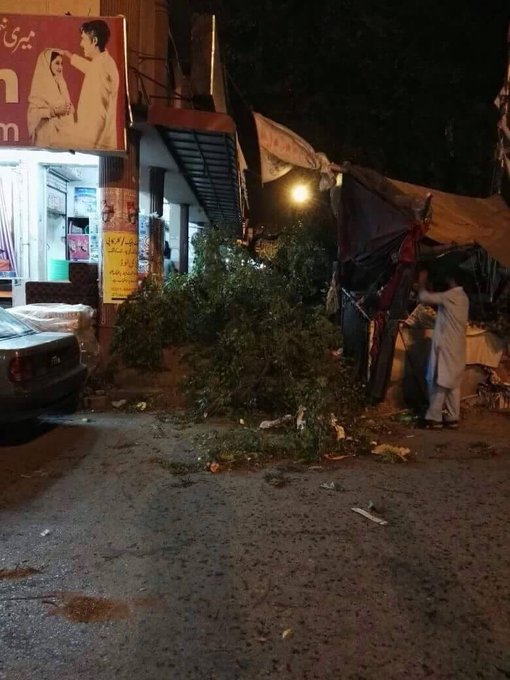
Reports poured in on social media that strong winds of over a hundred kilometres per hour uprooted trees and knocked over billboards, damaging property and blocking roads as the storm raged for hours. Power supply remained disrupted for the duration of the storm in many parts of the twin cities.
People shift an injured man in the capital city. ─ Online
Photos circulating on Twitter showed trees fallen on cars, with one user posting a video of fearful shoppers reacting to the storm inside the capital's popular shopping mall Centaurus.
Video courtesy Shaheryar Hassan
All hospitals and blood banks were put on alert and a help centre was set up by the federal government to help victims, according to PML-N member of National Assembly Maiza Hameed.
The severe weather also put flight operations at the Benazir Bhutto International Airport on hold, particularly departures. Normal operations resumed Thursday morning.
People shared photos and videos of damage in their immediate vicinity and advised friends in the city to stay safe.
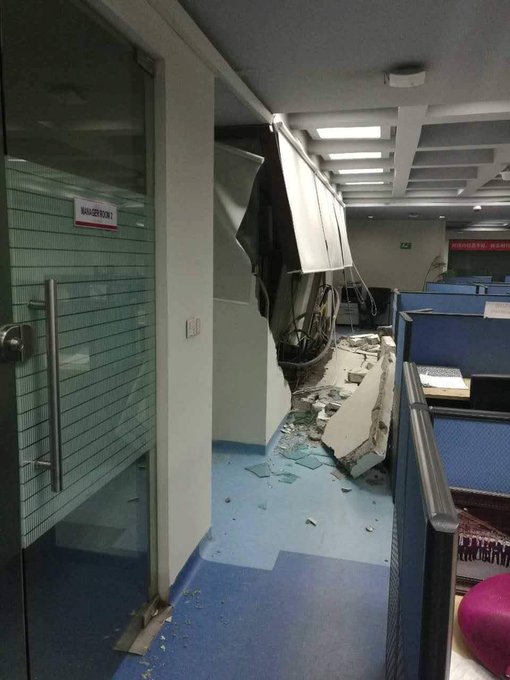
Power supply was interrupted throughout the storm
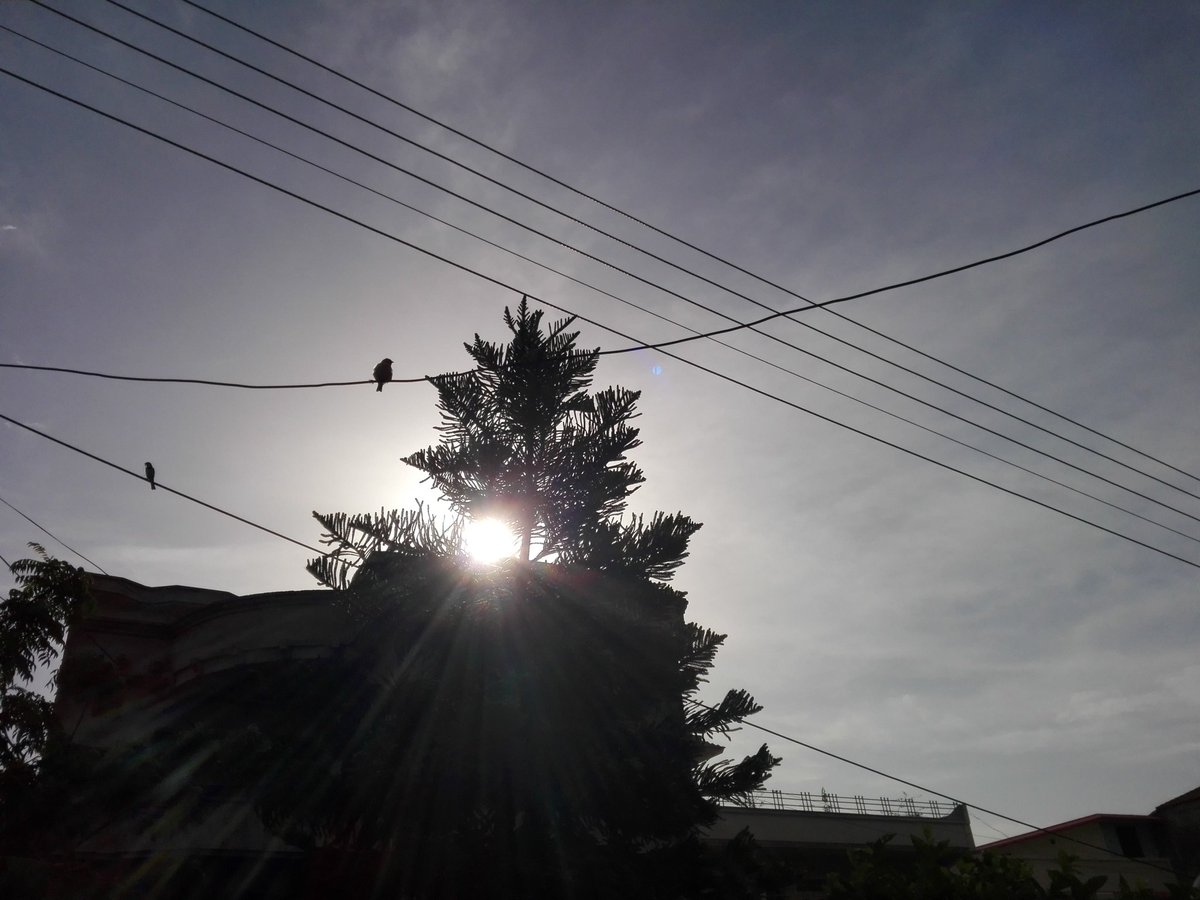
The storm ceased by morning, revealing crisp but overcast skies.
With additional reporting by Ali Akbar from Peshawar

PM orders inquiry into Met Dept’s ‘failure to predict storm’

ISLAMABAD: Prime Minister Nawaz Sharif on Friday sought an explanation from Pakistan Meteorological Department (PMD) over its failure to forecast the severe June 1 thunderstorm that struck Punjab, Khyber Pakhtunkhwa and Islamabad.
In a letter issued Friday, the PM ordered the Director General (DG) Met Dr Ghulam Rasool to submit an explanation of the “very serious and culpable neglect of duty” that was the failure to predict the storm which killed at least seven people.
The thunderstorm was visible “even to the naked eye” around 4pm on June 1, the letter said.
“Yet the Meteorological Department failed, despite the modern equipment and technology available to it, to either forecast, or to issue an adequate warning, regarding the impending storm which resulted in the loss of so many precious lives, injuries, and damage to property and installations.”
The latest warning from the department's website dates from May 16, while there is no archive of previous daily forecasts to confirm whether it detected an oncoming storm.
A regional forecast diagram from the Korean Meteorological Department, available through apartnership between PMD and the World Meteorological Organisation, depicts a oncoming storm crossing the border from the west.
The June 1 storm killed at least seven and injured dozens in Islamabad, Khyber Pakhtunkhwa and the Federally Administered Tribal Areas (Fata), causing significant damage to property and infrastructure.

All suspects in killing of Murree school teacher arrested: police

ISLAMABAD: Police announced on Friday that all five suspects in the brutal killing of a 19-year-old school teacher who was tortured, doused with gasoline and set on fire earlier this week for refusing to marry a man twice her age are now in custody.
Before she died, Maria Bibi had given a statement to police, saying five attackers had stormed her house in the town of Upper Dewal on Monday, dragged her to an open area and kicked her as though she were a “football".
She was brought to a Islamabad hospital in critical condition and later died. The attackers fled after the assault. Bibi's family has maintained that she was killed for rejecting a marriage proposal from a man who owned a school and wanted her to marry his son.
Police official Waheed Ahmed said on Friday that three more suspects in the case were arrested early in the morning, following the two arrests made the day before.
He identified the prime suspect in the case as Shaukat, the owner of the school who is nearly 60 years old and whose son, a man about 40 years old and already married, was the intended groom.
“The unfortunate woman Maria Bibi in her statement insisted that Shaukat and four other men dragged her from the door of her home and tortured and burned her. We have arrested all the five men,” Ahmed said.
Bibi's father Sadaqat Hussain Abbas praised the police for the arrests and asked the government in an emotional plea on Friday to execute the men in his family's presence in the same way they had killed Bibi.
Demands like this are common but Pakistani law doesn't allow for such punishment.
Zohra Yusuf, who heads the independent Human Rights Commission of Pakistan, condemned the incident and warned of an increase in assaults on women.
“As women are increasingly fighting for their rights, the reaction from the male-dominated society has been extreme, and we have witnessed an increase in violence against women,” she told The Associated Press.
Last month, police arrested 13 members of a local tribal council who allegedly strangled a local girl and set her body on fire for helping one of her friends elope.
The charred body of 17-year-old Ambreen Riasat was found in a burned van in the tourist resort of Donga Gali on April 29.
Nearly 1,000 women are killed each year in Pakistan in so-called “honour killings” for allegedly violating conservative norms on love and marriage.

All suspects in killing of Murree school teacher arrested: police

ISLAMABAD: Police announced on Friday that all five suspects in the brutal killing of a 19-year-old school teacher who was tortured, doused with gasoline and set on fire earlier this week for refusing to marry a man twice her age are now in custody.
Before she died, Maria Bibi had given a statement to police, saying five attackers had stormed her house in the town of Upper Dewal on Monday, dragged her to an open area and kicked her as though she were a “football".
She was brought to a Islamabad hospital in critical condition and later died. The attackers fled after the assault. Bibi's family has maintained that she was killed for rejecting a marriage proposal from a man who owned a school and wanted her to marry his son.
Police official Waheed Ahmed said on Friday that three more suspects in the case were arrested early in the morning, following the two arrests made the day before.
He identified the prime suspect in the case as Shaukat, the owner of the school who is nearly 60 years old and whose son, a man about 40 years old and already married, was the intended groom.
“The unfortunate woman Maria Bibi in her statement insisted that Shaukat and four other men dragged her from the door of her home and tortured and burned her. We have arrested all the five men,” Ahmed said.
Bibi's father Sadaqat Hussain Abbas praised the police for the arrests and asked the government in an emotional plea on Friday to execute the men in his family's presence in the same way they had killed Bibi.
Demands like this are common but Pakistani law doesn't allow for such punishment.
Zohra Yusuf, who heads the independent Human Rights Commission of Pakistan, condemned the incident and warned of an increase in assaults on women.
“As women are increasingly fighting for their rights, the reaction from the male-dominated society has been extreme, and we have witnessed an increase in violence against women,” she told The Associated Press.
Last month, police arrested 13 members of a local tribal council who allegedly strangled a local girl and set her body on fire for helping one of her friends elope.
The charred body of 17-year-old Ambreen Riasat was found in a burned van in the tourist resort of Donga Gali on April 29.
Nearly 1,000 women are killed each year in Pakistan in so-called “honour killings” for allegedly violating conservative norms on love and marriage.

China says Muslim practices to be protected during Ramazan

BEIJING: China's government won't interfere with fasting and other standard religious activities in the traditionally Muslim region of Xinjiang during the Islamic holy month of Ramazan that begins this month, officials said Thursday.
Restaurants will be allowed to keep their own hours and authorized activities in mosques and private homes will be legally protected, the officials said at a news conference on religious policy in Xinjiang, despite complaints from rights groups and others of past government interference during the religious holiday.
Xinjiang is home to China's Muslim Uighur minority group that is culturally, religiously and linguistically distinct from the Chinese majority. It has seen waves of violence against civilians in recent years which authorities have blamed on radicals seeking independence from Beijing.
China maintains tight restrictions over Islamic observances in the area, in part to maintain government control and stem the influence of radical Islam.
However, human rights groups and Uighurs in exile say restrictions on dress, prayer and fasting during Ramazan have exacerbated ethnic tensions, while government efforts to assimilate Uighurs have stoked resentment.
President Xi Jinping recently stated that members of the ruling Communist Party should be "unyielding Marxist atheists," and the state imposes strict rules on participation in religious by students, teachers, public servants and others.
Chinese officials routinely dismiss criticism of religious policies, and Tuergan Pida, director of Xinjiang's ethnic affairs committee, said at the news conference that religious freedoms are at an "unprecedented" high.
The regional government helped arrange emergency prayer sites following an earthquake during Ramazan last year, while Communist Party officials ate with religious leaders to mark the end of the holy month, Pida said.
Chinese claims of unprecedented religious freedom in Xinjiang are "deeply ironic and troubling" given recent events, said James Leibold, a scholar of China's ethnic policy at Australia's La Trobe University.
Leibold cited the sacking last month of Wang Zhengwei, the Muslim chairman of the State Ethnic Affairs Commission, amid speculation that top Chinese leaders opposed the building of mosques under his watch.
"This illustrates the deep divisions at the top reaches of the party over the value and place of religious and ethnic diversity within Chinese society," Leibold said by telephone.

Modi goes to Washington as US partner, but not yet full ally

NEW DELHI: Two years ago there were questions over whether Indian Prime Minister Narendra Modi could get a visa to enter the United States. Next week he visits Washington as one of President Barack Obama's closest international partners.
Obama invited Modi for one of the last big visits by a world leader before his term ends in January. Although the trip won't feature a lavish state dinner, the Indian leader will address both houses of Congress, considered a rare honour.
This will be their seventh meeting since Modi became prime minister in May 2014, an impressive tally for a US president and a leader who is not a formal ally, said Ashley Tellis at the Carnegie Endowment for International Peace in Washington.
“The personal relationship between the president and the prime minister ... is really one of the unanticipated surprises of the past two years,” said Tellis, an expert on India.
The developing relationship is seen as an Obama foreign policy success. Washington views India as an important part of its re-balance to Asia and as a counterweight to China.
The two countries are finalising agreements that would make it possible for their militaries to cooperate more closely, and for US defence manufacturers to both sell and make high-tech weaponry in India.
A deal on logistics would govern issues such as how the two countries account for costs of military exercises. Another involves encrypted communications and geospatial data transfer.
A history of colonial rule followed by decades of non-alignment has, however, made New Delhi wary of an embrace by the more powerful US, which has overtaken Russia as India's top arms supplier.
“It is neither a strategic partnership nor an alliance,” said Nitin Gokhale, founder of defence portal Bharat Shakti. “It can be a long-term arrangement, but to call it a strategic partnership would be premature.”
There are frustrations, too, on the US side.
The two countries reached a civil nuclear agreement in 2005, but it has yet to yield any contracts for US-based companies. Only now is Westinghouse, a unit of Japan's Toshiba, approaching the finish line on a deal to build six reactors in India.

Getting to know you

The visit gives Modi a chance to network with US lawmakers who may feature in a Donald Trump or Hillary Clinton administration but, as it coincides with the California primary, he is not expected to meet either.
Modi is generally popular with US lawmakers, who extended his invitation to address Congress. But they criticise what they see as lingering unfriendliness to US firms and a stifling bureaucracy, and question New Delhi's record on human rights.
“The economic engagement between our two countries should increase and it should be more accessible for US companies,” Senator Bob Corker, the Republican chairman of the Senate Foreign Relations Committee, said in a telephone interview.
Obama and Modi are expected to discuss India's desire to join the Nuclear Suppliers Group (NSG), a 48-member club of nuclear trading nations.
India was shut out for decades because of its weapons program, and the civil nuclear agreement with the US gave it access to foreign suppliers without giving up its arms.
Obama administration officials have said they backed India's desire to join the group, but the idea faces resistance among some on Capitol Hill, as well as from China, an ally of India's arch-rival Pakistan.
“Existing NSG guidelines were established to guard against nuclear proliferation, and we should not create exceptions for particular countries,” Corker said.
There is lingering concern in Washington over Modi's handling of communal riots in 2002 that killed at least 1,000 people, mostly Muslims, in Gujarat.
Modi was chief minister of the state at the time and, though a court-ordered inquiry found insufficient evidence to prosecute him, the issue prevented him from getting a US visa for years.
Ben Cardin, the ranking Democrat on the Senate Foreign Relations Committee, raised human rights on a visit to New Delhi this week, saying the two largest democracies had “special obligations” to set the highest standards.
Congress' Tom Lantos Human Rights Commission has scheduled a hearing on India for June 7, the day Modi arrives in Washington and the day before his address to the combined House of Representatives and Senate. He leaves the US on June 8.
Corker promised to asked Modi about India's record on human trafficking, which he brought up recently in an emotional Senate hearing with Obama administration officials.
“The country we believe has 12-14 million slaves, which is close to half the number we believe exists worldwide,” Corker said. “It's obviously a very significant issue and when he's here, it's one I certainly plan to raise.”

Pakistan Election 2018 View political party candidates, results

https://www.geo.tv/election/candidates